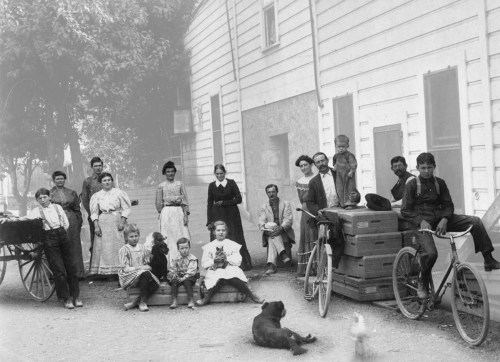
Spanning centuries and generations, the Taplin family’s Napa Valley story begins with families who arrived in the region in the mid-1800s.
In 1864, horticulturist John Lewelling, from a Quaker abolitionist family, purchased the St. Helena estate the Taplins now call home. Lewelling’s expertise in tree grafting helped establish the fruit industry on the Pacific Coast. John and his brothers, Henderson and Seth, had famously transported living fruit trees across the Oregon Trail, bringing the first grafted plantings to the West Coast and establishing a nursery in Oregon where they developed the Bing cherry. When John Lewelling arrived in Napa Valley, Winemaker Charles Krug asked him to bring and graft European Vitis vinifera wine grapes because of his reputation as a master grafter.
Around the same time, John Orange Taplin moved his dairy farm from Vermont to San Francisco into what is now the Cow Hollow neighborhood. When the city grew too crowded for cows, he moved to St. Helena in 1871, establishing Taplin Brothers Dairy along the current Taplin Road on the eastern side of the valley, on the opposite side from the Lewelling property.
At the turn of the 20th century, neighbors and classmates Albert Taplin and Ethel Lewelling married. They chose to settle on the Lewelling property and farm the land through Prohibition, the Great Depression and shifting agricultural markets. Their son, Kenneth Taplin, would carry both legacies forward.
A ranch that has seen the evolution from grain for horses and cattle, to grapes, to walnuts and prunes, and eventually back to grapes for fine wine, Taplin remains one of Napa Valley’s longest continuously family-owned properties with unbroken stewardship.
In the 1970s, the property was leased and planted to Merlot, then t-budded to Chardonnay. In the mid 1990s, Kenneth transitioned the family from leasing, to becoming sole growers, thus beginning the Taplin Cellars winemaking trajectory. “After converting the vineyards to Cabernet Sauvignon, we quickly learned that it was easy to take care of, did very well on our property, and eventually became the grape that now defines much of Napa Valley,” says Bill Taplin. “This land has been waiting for generations for someone to listen, and its time to shine has arrived,” adds Stephen. This decision established the modern era of Taplin grapegrowing and, through it all, the land continues to remain in family hands.

Back to Recent Updates