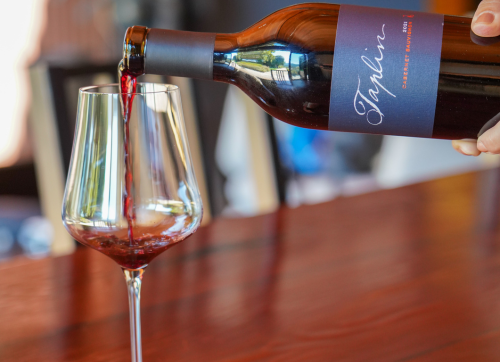
If you’ve ever taken a sip of Cabernet Sauvignon and noticed that your mouth suddenly feels a little dry or your cheeks seem to tighten, you’ve experienced tannins.
Tannins are one of the most important—and sometimes misunderstood—components of red wine. It’s responsible for much of the texture, structure and ageability we love in Cabernet Sauvignon. And when it comes to Napa Cabernet, tannin is a big part of what gives the wines their distinctive combination of power, elegance and staying power.
At Taplin Cellars, it’s something we pay close attention to in every vintage. We want our Cabernet to have structure, but never at the expense of balance. The goal is tannins that gives the wine shape and length while allowing the fruit, acidity and oak to remain in harmony.
So, What Exactly Are Tannins?
Tannins are naturally occurring compounds called polyphenols. In wine, they come primarily from the skins, seeds and stems of the grapes, and they can also be contributed by oak during barrel aging.
Unlike acidity or sweetness, tannins aren’t technically a flavor. They’re more of a sensation—a feeling of texture on your palate.
(Think about the sensation you get from drinking strongly brewed black tea. That drying, slightly grippy feeling on your gums and the inside of your cheeks? That’s tannins.)
In red wine, tannins bind with proteins in your saliva, temporarily reducing the lubrication in your mouth and creating that characteristic drying or astringent sensation.
And while the word “tannins” can sometimes sound like something we want to avoid, tannins are actually a very good thing in a well-made Cabernet.
Why Does Cabernet Sauvignon Have Tannins?
Cabernet Sauvignon is naturally a tannic grape. Its relatively thick skins contain significant amounts of tannins, and during red wine fermentation, the juice spends time in contact with those skins. The longer and more intensely that contact occurs, the more tannins can be extracted into the wine.
But the amount of tannins isn’t the whole story. The quality and integration of the tannins matters just as much.
A young wine with aggressive, unripe tannins can feel harsh or drying. A wine with ripe, well-integrated tannins can feel firm and structured while still being remarkably smooth. Napa Cabernet is often celebrated for exactly this balance: ripe fruit, substantial structure and tannins that provide shape without overwhelming the palate.
That’s one reason we love Cabernet Sauvignon at Taplin. When everything comes together, tannins aren’t something that sit on top of the wine, they become part of the wine’s architecture.
Tannins Are What Gives Cabernet Its Backbone
It’s helpful to think of tannins as the framework of a wine.
Fruit gives a Cabernet its personality. Acidity gives it freshness. Alcohol contributes body and warmth. Oak can add layers of spice, cedar and toast. Tannins provides structure that holds all of those elements together.
This structure is especially important for wines intended to age. Over time, tannins soften and become more integrated, while the wine develops additional layers of flavor and complexity. That evolution is one of the great pleasures of cellaring Cabernet Sauvignon.
It’s also why a young Cabernet can sometimes feel more muscular than the same wine after several years in the bottle. The tannins haven’t disappeared—they’ve simply become softer and more seamlessly woven into the wine.
Why Tannins and Food Are Such a Good Match
Here’s where tannins get particularly interesting.
Tannic wines are among the best wines to bring to the dinner table because tannins interact beautifully with foods that contain protein and fat. Those components soften the perception of tannins, making the wine feel rounder and more supple while allowing its fruit and other flavors to come forward.
In other words, sometimes a Cabernet that seems a little firm on its own becomes absolutely seamless when you take a bite of the right food.
Steak and Cabernet Sauvignon: A Classic for a Reason
Take a beautifully marbled ribeye.
The richness and protein of the steak soften the drying sensation of the Cabernet’s tannins. At the same time, the wine’s structure helps refresh the palate between bites. If the steak has been grilled over high heat, the charred crust adds another layer of connection—the savory, slightly smoky flavors echo the darker, toasted notes that often appear in Cabernet.

Back to Recent Updates